


Born as Abhas Kumar Ganguly on 4th August, 1929, this great singer known as Kishore Kumar, affectionately called Kishore Da, was one of those very few singers who took risks and experimented with different styles of music. Considered to be a legend in Hindi film world, this multi talented persona has excelled as a playback singer, actor, composer, lyrics writer, director, producer and script writer. The songs of Kishore Kumar have an extraordinary blend of romance, emotions, naughtiness and melancholy. We attempt to present the life history of Kishor Kumar in this short biography.
Kishore Kumar was born in a small place known as Khandwa located in the state of Madhya Pradesh. He was born in a typical Bengali family and was the youngest among his siblings. He had two elder brothers (Ashok Kumar and Anoop Kumar) and a sister (Sati Devi). His father Kunjilal Ganguly was a lawyer by profession and his mother Gauri Devi was from a well-to-do family. When his eldest brother Ashok Kumar became an actor, Kishore Kumar was still quite young. Later on, his second brother also ventured into movies to become an actor.
Kishore Kumar also started to show interest in music and often mimicked the great K.L. Saigal. Though he did not have any formal training in music, he decided to pursue it and followed his brothers to Mumbai. It was his dream to become a famous playback singer and be counted among legends. He would often go to the studios and ask producers if he could sing on the movie's soundtrack. Initially he could not develop a style of his own but nevertheless he perfectly imitated K.L. Saigal. Once, the great S.D Burman had come to Ashok Kumar's house to meet up when he heard Kishore singing. He actually thought it was K.L. Saigal singing and inquired if he was there too! When he came to know that it was Kishore singing, he truly appreciated and encouraged the young lad to continue refining his voice but at the same time, develop a style of his own.
Kishore kept this advice in mind and went on develop his own signature style. He perfected yodeling, a unique style he heard amongst the Austrian music collections of his brother Anoop. In Hindi film industry, his yodeling turned out to be widely popular and became a trademark of Kishore Kumar. His songs sounded absolutely natural, like laughter. He used to incorporate non-sensical terms into his songs and give it an entirely new feel. The ability to transform his voice according to not just the scene but also the actor is something that was truly incredible of Kishore. He has sung soulful songs for Dev Anand and also fun filled songs for Rajesh Khanna.
After Rajesh Khanna went out of the scene, Kishore Kumar belted out chart topping hits for superstar Amitabh Bachchan. When R.D. Burman stormed the music world, Kishore Kumar re-surfaced with hits like Roop Tera Mastana and many other melodious songs. Some films that deserve a special mention are Hum Kisi Se Kum Nahin, Kinara, Dream Girl, Anurodh, Sharabi, Mr. Natwarlal, Gol Maal, Dostana, Manzil, Padosan, Shalimar, Khatta Meetha, Kasme Vaade, Ghar, Don, Muqaddar Ka Sikandar, Chalti Ka Naam Gaadi, Dilli Ka Thug, etc.
When his popularity began to diminish during mid 80's, he retired and wanted to return back to Khandwa, his native place. Unfortunately, it was not meant to be. On October 13th 1987, co-incidentally the birthday of his elder brother Ashok Kumar, Kishore suffered a heart attack and breathed his last. His untimely and unexpected death shocked the entire nation. Kishore Kumar married four times and his eldest son Amit Kumar also ventured into the world of music.
Thursday, July 2, 2009
History of Bollywood
At the turn of this century, when the country was poised for major social and political reforms, a new entertainment form dawned in India-the Cinema. The first exposure to motion pictures which India received was in 1896, when the Lumiere Brothers' Chinematographe unveiled six soundless short films at Watson Hotel, Esplanade Mansion, Bombay on July 7. And the first exposing of celluloid in camera by an Indian and its consequent screening took place in 1899, when Harishchandra Bhatvadekar (Save Dada) shot two short films and exhibited them under Edison's projecting kinetoscope. Hiralal Sen and F.B. Thanawalla were two other Indian pioneers engaged in the production of short films in Calcutta and Bombay in 1900. Around 1902, J.F. Madan and Abdullah Esoofally launched their career with Bioscope shows of imported short films. In 1912 , N.G. Chitre and R.G. Torney made a silent feature film Pundalik which was released on May 18, and it was half British in its make. Dhundiraj Govind Phalke, more generally known as Dada Saheb Phalke was responsible for the production of India's first fully indigenous silent feature film Raja Harishchandra which heralded the birth of the Indian film industry. The film had titles in Hindi and English and was released on May 3, 1913 at the Coronation Cinema, Bombay. In 1917, Bengal saw the birth of its first feature film-Satyabadi Raja Harishchandra made by Madan's Elphinstone Bioscope Company. In Madras, the first feature film of South India Keechaka Vadham was made by Nataraja Mudaliar in 1919. After stepping into 1920, the Indian cinema gradually assumed the shape of a regular industry. The industry also came within the purview of the law. The new decade saw the arrival of many new companies and film makers. Dhiren Ganguly (England Returned), Baburao Painter (Savkari Pash), Suchet Singh (Sakuntala), Chandulal Shah (Guna Sundari), Ardershir Israni, and V. Santharam were the prominent film makers of the twenties. The most remarkable things about the birth of the sound film in India is that it came with a bang and quickly displaced the silent movies. The first Indian talkie Alam Ara produced by the Imperial film company and directed by Ardershir Irani was released on March 14, 1931 at the Majestic Cinema in Bombay; The talkie had brought revolutionary changes in the whole set up of the industry. The year 1931 marked the beginning of the talking ear in Bengal and South India. The first talkie films in Bengali (Jumai Shasthi), Telugu (Bhakta Prahlad) and Tamil (Kalidass) were released in the same year. The thirties is recognised as the decade of social protests in the history of Indian Cinema. Three big banners-Prabhat, Bombay Talkies and New Theatres gave the lead in making serious but gripping sand entertaining films for all classes of the wide audience. A number of films making a strong plea against social injustice were also made in this period like V.Santharam's Duniya Na Mane, Aadmi and Padosi, Franz Osten's Achut Kanya, Damle & Fatehlal's Sant Thukaram, Mehboob's Watan, Ek hi Raasta and Aurat. For the first time Ardeshir Irani attempted a colour picture in 1937 with Kisan Kanya. The decade also witnessed the release of the first talkie films in Marathi (Ayodhiyecha Raja 1932), Gujarathi (Narasinh Mehta-32), Kannada (Dhurvkumar-34); Oriya (Sita Bibaha-34); Assamese (Joymati-35); Punjabi (Sheila-35) and Malayalam(Balan-38). The decade during which the second world was fought and Indian independence won, was a momentous one for cinematography all over India. Some memorable films were produced during the forties such as Shantharam's Dr. Kotnis Ki Amar Kahani, Mehboob's Roti, Chetan Anand's Neecha Nagar, Uday Shanker's Kalpana, Abbas's Dharti Ke Lal, Sohrab Modi's Sikander, Pukar and Prithvi Vallabh, J.B.H. Wadia's Court Dancer, S.S. Vasan's Chandralekha, Vijay Bhatt's Bharat Milap and Ram Rajya, Rajkapoor's Barsaat and Aag. The first International Film Festival of India held in early 1952 at Bombay had great impact of Indian Cinema. The big turning point camp in 1955 with the arrival of Satyajit Ray and his classic Pather Panchali which opened up a new path leading the Indian film to the World Film Scene. International recognition came to it with the Cannes award for best human document followed by an unprecedented crop of foreign and national awards. In Hindi Cinema too, the impact of neorealism was evident in some distinguished films like Bimal Roy's Do Bigha Zamin, Devadas and Madhumati, Rajkapoor's Boot Polish, Shri-420 and Jagte Raho, V. Shantharam's Do Aankhen Barah Haath and Jhanak Jhanak Payal Baaje, Mehbood's Mother India. Gurudutt's Pyaasa, and Kagaz Ke Phool and B.R. Chopra's Kanoon; The first Indo-Soviet co-production Pardesi by K.A.Abbas was also made during the fifties. The transition to colour and the consequent preference for escapist entertainment and greater reliance on stars brought about a complete change in the film industry. The sixties was a decade of mediocre films made mostly to please the distributors and to some extent, meet the demands of the box office. The sixties began with a bang with the release of K. Asif's Mughal-E-Azam which set a record at the box-office. It was followed by notable productions which include romantic musical and melodramas of a better quality. Rajkapoor's Jis Desh Mein Ganga Behti Hai, Sangam, Dilip Kumar's Gunga Jamna, Gurudutt's Sahib Bibi Aur Gulam, Dev Anand's Guide; Bimal Roy's Bandini, S.Mukherji's Junglee, Sunil Dutt's Mujhe Jeene Do and the experimental Yaadein, Basu Bhatacharya's Teesri Kasam, Pramod Chakravorthy's Love in Tokyo, Ramanand Sagar's Arzoo, Sakhti Samantha's Aradhana, Hrishikesh Mukherji's Aashirwad and Anand, B.R. Chopra's Waqt, Manoj Kumar's Upkar, and Prasad Productions Milan were the significant Hindi films of the decade. Among the regional languages, Malayalam cinema derived much of its strength from literature during the sixties. Malayalam cinema hit the head lines for the first time when Ramu Kariat's Chemmeen (1965) won the President's Gold Medal. Towards the end of the decade, Mrinal Sen's Bhuvan Shome, signalled the beginnings of the new wave in Indian Cinema. The New Indian Cinema emerged as a reaction to the popular cinema's Other Worldiness. It is a cinema of social significance and artistic sincerity, presenting a modern, humanist perspective more durable than the fantasy world of the popular cinema. Satyajit Ray, Ritwik Ghatak and Mrinal Sen were the founding fathers of the new cinema in India. Acclaimed as India's foremost director Satyajit Ray has made 30 feature films and five documentaries, tacking a wide range of rural, urban historical themes. His cinematography places him away form the inheritors of the neorealist school, and yet his films are infused with an unusual humaneness. Pather Panchali, Apur Sansar, Charulata, Jalsaghar, Goopy Gyne Bagha Byne, Seemabadha, Jana Aranya, Ashani Sanket and Agantuk are some of his outstanding films. He was fortunate enough to present his films in almost all the leading films festivals of the world. The national and international awards won by Ray are numerous. Ritwik Ghatak swooped on the Indian scene with new dynamism. His films constitute a record of the traumas of change form the desperation of the rootless and deprived refugees from East Bengal .(Meghe Dhaka Tara, Ajantrik, Komal Ghandhar, Subarnarekha). Mrinal Sen is the ebullient one-experimenting with neorealism as well as new wave and fantasy. His notable films are Bhuvan Shome, Chorus, Mrigaya, Ek Din Pratidin, Akaler Sandhane, Kharij & Khandahar. He has also won several national an international awards. In Bombay, a new group of film makers emerged on the Hindi cinema. Notable amongst them are Basu Chatterji (Sara Akash), Rajinder Singh Bedi (Dastak), Mani Kaul (Uski Roti, Duvidha), Kumar Shahani (Maya Darpan), Avtar Kaul (27-Down), Basu Bhattacharya (Anubhav), M.S. Sathyu (Garam Hawa), Shyam Benegal (Ankur), and Kanthilal Rathod (Kanku). In Calcutta, following the trend set by Ray, Ghatak and Sen, Tapan Sinha and Tarun Majumdar also made some note worthy films. (Kabuliwala, Hatey Bazarey, Harmonium, Safed Haathi; Balika Bodhu, Nimantran, Ganadevta, Dadar Kirti). The seventies has further-widened the gap between multistar big budgeted off beat films. The popular Hindi hits of the decade include Kamal Amrohis Pakeeza, Rajkapoor's Bobby , Devar's Haathi Mere Saathi, Ramesh Sippy's Sholay, Zanjeer, Deewar, Khoon Pasina, Yaadon Ki Baarat, Kabhi Kabhi, Dharamveer, Amar Akbar Anthony, Hum Kisise Kum Nahin, and Muqaddar ka Sikandar. Of these majority of the films were action oriented with revenge as the dominating theme. Down in the South, the new wave cinema originated in Karnataka and Kerala. Pattabhi Rama Reddy's Damskara (70) and Adoor Gopalakrishnan's Swayamvaram (72) were the trend setters in Kannada and Malayalam respectively. This continued with a series of socially conspicuous films like M.T. Vasidevan Nair's Nirmalyam, B.V.Karanth's Chomana Dudi, Girish Karnad's Kaadu, Girish Kasara Valli's Ghatasradha, G. Aravindan's Uttarayanam and Thamp, K. Balachander's Arangetram, Avargal and Apoorva Ragangal, Adoor's Kodyettam, K.G. George's Swapnadanam and P.A. Backer's Chuvanna Vithukal and G.V.Iyer's Hamsageethe. The Hindi avante garde or new wave seems to have reached its bloom period towards the end of the seventies with the coming of film makers like Govind Nihalani (Aakrosh), Saeed Mirza (Albert Pinto Ko Gussa Kyon Aata Hai, Aravind Desai ki Ajeeb Daastan), Rabindra Dharmaraj (Chakra), Sai Paranjpe (Sparsh), Muzafar Ali (Gaman) and Biplab Roy Chowdhari (Shodh). The movement spread to the other regional cinemas such as Marathi, Gujarathi, Assamese, Oriya and Telugu. Directors like Jabbar Patel (Samna, Simhasan), Ramdas Phuttane (Sarvasakshi), Ketan Mehta (Bhavni Bhavai). Babendranath Saikia(Sandhya Rag), Jahanu Barua (Aparoopa, Papori), Manmohan Mohapatra (Klanta Aparanha, Majhi Pahacha), Nirad Mohapatra (Maya Miriga) and Gautam Ghose (Ma Bhoomi) came to the scene with their films.Also from the South came film makers such as Jayakantan, John Abraham, Bharathan, Padmarajan, Balu Mahendra, Bharathi Raja, T.S. Ranga, T.S. Nagabharana, K.R. Mohanan, G.S. Panicker, Chandrasekhar Kambar, P.Lankesh, C. Radhakrishnan and Bhagyaraj who presented significant films like Unnai Pol Oruvan, Agraharathil Kazhuthai, Prayanam, Peruvazhiambalam and Oridathsoru Phayalvan, Kokila, 16 Vayathinile and Kizhakke Pokum Rail , Geejegand Goodu, Grahana, Aswathama, Ekakini, Kaadu Kudre, Pallavi, Agni, Suvar Illatha Chithrangal and Mundani Mudichu. The new cinema movement continued with full spirit in. the next decade (eighties) also . Shyam Benegal presented some good movies like Manthan, Bhumika, Nishant, Janoon , and Trikal. Nihlani's Aaghat and Tamas were remarkable works. Other important films with new style of treatment include Damul (Prakash Jha), 36-Chowringhee Lane (Aparna Sen), New Delhi Times (Ramesh Sharma), Mirch Masala (Ketan Mehta), Rao Saheb (Vijaya Mehta), Debshishu (Utpalendu Chakraborthy), Massey Saheb (Pradeep Kishna), Trishagni (Nabayendu Ghosh), Ijaazat (Gulzar), Umrao Jaan (Muzafar Ali), Dakhal, Paar (Gautam Ghose), Dooratwa, Neem Annapurana, Andhi Gali (Buddhadeb Dasgupta), Aajka Robin Hood (Tapan Sinha), Tabarana Kathe, Bannada Vesha (Girish Kasara Valli), Accident & Swamy (Shanker Naag), Daasi (B. Narasinga Rao) and Phaniyamma (Prema Karanth). The new wave masters of Kerala, Adoor and Arvindan, consolidated their position in the eighties with their films Elippathayam, Mukha Mukham, Anantharam, Esthappan, Pokkuveyil, Chidambaram, and Oridath, Elippathayam has won the prestigious British film Institute award for 1982. Shaji N.Karun's maiden film Piravi(1988) bagged several national and international awards and was shown in nearly forty film festivals. Meera Nair, the young woman director, won the Golden Camera award at Cannes for her first film Salaam Bombay in 1989. In 1990, Adoor Gopalakrishnan's Mathilukal won the FIPRESCI and UNICEF awards. The late eighties and early nineties saw the revival of the musical love stories in Hindi cinema. Mr. India, Tezaab, Qayamat se Qayamat Tak, Main Pyar Kiya, Chandni, Tridev, Hum, Ghayal, Saudagar, Rakhwala, Jo Jeeta Wohi Sikander, Hum Hain Rahi Pyarke, Baazigar, Aaina, Yeh Dillagi, Hum Apake Hai Kaun, Krantiveer, Raja and Rangeela were some of the popular Hindi films of the last decade. The first half of nineties witnessed the release of some better films in Hindi as well as in other regional languages. Drishti and Drohkal (Nihalani), Lekin (Gulzar), Disha (Sai Paranjpe), Prahar (Nana Patekar), Parinda (Vinod Chopra), Diskha (Arun Kaul), Kasba (Kumar Shahani), Rudaali (Kalpana Lajmi), Maya Memsaab (Ketan Mehta), Mujhse Dosti Karoge (Gopi Desai), Suraj Ka Satwan Ghoda & Mammo (Benegal), Who Chokri (Subhankar Ghosh)&Ek Doctor Ki Maut (Tapan Sinha), were some of the notable Hindi films from Bengal, Orissa, Assam and Manipur came films like Tahader Katha, Bagh Bahadur, Charachar (Buddhadeb Dasgupta), Uttoran (Sandip Ray), Wheel Chair (Tapan Sinha), Unishe April (Rituparno Ghosh), Adi Mimansa, Lalvanya Preethi (A.K. Bir), Nirbachana (Biplab Roy Chowdhari), Halodhia Choraya Baodhan Khai, Firingoti (Jahau Barua), Haladhar (Sanjeev Hazarika), and Ishanou (Aribam Shayam Sharma). In the South Malayalam Cinema presented some notable films. They include Vasthuhara (Aravindan)_, Vidheyan (Adoor) Kireedom, Bharatham (Siby Mmalayil), Amaram (Bharathan) Innale (Padmarajan), Oru Vadakkan Veeragatha, Sargam, Parinayam (Hariharan), Devasuram (I..V.Sasi). Kilukkam, Thenmavin Kombath (Priyadarsan), Perumthachan (Ajayan), Daivathinte Vikurthikal (Lenin Rajendran), (Sivan), Manichithrathazu (Fazil), Ponthanmada (T.V. Chandran) and Swaham (Shaji), From Tamil and Telugu cinema, there came few films like Anjali, Roja and Bombay (Mani Ratnam) ,Marupakkam and Nammavar (Sethsumadhavan),Karuthamma (Bharathi Raja), Surigadu (Dasari Narayana Rao), Swathi Kiranam (K.Viswanath), Mogha Mul (G.Rajasekharan) etc. English film like Miss Beatty's Children (Pamela Rooks), and English August (Dev Benegal) were also produced during this period. All in all, it has been a long story of nearly nine decades, with the early shaky screen images turning into a multi pronged and multi winged empire of its own, that has yielded about 27,000 feature films and thousands of documented short films. Cinema has raised India's flag high in the world as the consistently largest film producer. But when it comes to quality the flag has to fly half mast. All the above information is courtesy of: All India.
Friday, June 12, 2009
Biography of Asha Bhosle

With versatility as her middle name, the famous Asha Bhosle still sings the way she used to during her prime. Though she is over 70 years of age, she still continues to give stiff competition to singers who are half her age. This talented singer can sing a ghazal and a peppy cabaret number with amazing levels of energy and style. Be it the romantic "Oh Mere Sona Re" or the sensuous "Aaiye Meherban" or the peppy "Kambakth Ishq", Asha Bhonsle can add life to any song. Her life history is no less than a roller coaster ride. Check out the biography of Asha Bhonsle as given here.
Asha Bhosle was born on 8th September, 1933 in a Marathi family. Her father was the renowned singer and actor Dinanath Mangeshkar. He trained her in classical music at a very young age. Though she had her brush with acting as a child artist, it was quite natural for her to choose playback singing like her older sister Lata Mangeshkar. Sadly, her father expired suddenly in the year 1942 causing much commotion in her family. They had to move from Pune to Bombay and settle again. Asha got the chance to sing in a Marathi film when she was ten years old. Her initial years saw a lot of struggle since her elder sister Lata was in much demand and unfair comparisons rose every now and then.
In the year 1948 she got to make her playback debut in Hindi in a film called Chunariya. The song was called "Saawan Aaya" and Asha was noticed for her different playful voice. When she was 16, she eloped with Lata's personal secretary Ganpatrao Bhosle and married him much against the family's wishes. The marriage failed miserably and Asha Bhosle was driven out by Ganpatrao following some misunderstanding. She came back to her maternal home with two kids and pregnant with the third one. However, this did not deter her from pursuing her dreams and she continued to sing for films. During 1950's she got assignments that were rejected by leading singers like Geeta Dutt, Lata Mangeshkar and Shamshad Begum.
These songs were basically meant for the sidelined roles like vamps, cabaret numbers or C-grade movies. It took a lot of perseverance from Asha to make it to the top. Her hard work and efforts paid off when she was given her first big break with the movie C.I.D (1956). Under the patronage of O.P Nayyar she got more and more offers and began belting out hits after hits. She tasted huge success with the movie Naya Daur (1957). With O. P Nayyar, Asha gave out hits after hits like Aaiye Meherban, Deewana Hua Badal, Isharon Isharon Mein, Aao Huzur Tumko, Ude Jab Jab Zulfein Teri, etc. The last song she recorded with him was "Chain Se" of the movie "Pran Jaaye Par Vachan Na Jaaye" (1974) and then parted ways.
She was noticed by other music directors like S.D Burman after the phenomenal success of these songs. She and S.D Burman created many hit soundtracks for movies like Kaala Pani, Kaala Bazaar, Insaan Jaag Utha, Lajwanti, Sujata and Teen Deviyaan. Most famous of these songs were Asha Bhosle's duets with Mohammed Rafi and Kishore Kumar. After the mid 60's Asha collaborated with R.D Burman and reached the peak of her career. The movie "Teesri Manzil" released in 1966 shot her to fame and she won popular acclaim. The duo of Asha and R.D Burman produced hits after hits and their collaboration resulted in marriage.
Asha became the voice of Helen, one of the most graceful dancers of that era. Helen would visit Asha during her recordings to understand the feel of the song and choreograph her steps accordingly. Some of her evergreen hits featuring Helen are Piya Tu Ab To Aaja (Caravan), O Haseena Zulfon Wali (Teesri Manzil), and Yeh Mera Dil (Don). A popular song "Jaane Jaa" from the movie Jawaani Diwaani (1972) required her to switch from high pitch to low almost simultaneously which she did with utmost ease and perfection. The song "Dum Maro Dum" of the movie "Hare Rama Hare Krishna" showed an entirely new side of her talent. The romantic "Chura Liya Hai Tumne" from the movie "Yaadon Ki Baarat" is hummed even today and is considered to be one of the most romantic songs of this century.
Asha proved critics wrong in 1980's when she sang beautiful Ghazals for the movie Umrao Jaan. She proved that she can sing classical with as much panache as other genres. The great composer Khayyam told her to sing two notes lower than usual. The rest as they say is history! The songs turned out to be chart toppers and till date are sung with much elegance and respect, though it is picturized on a courtesan. In the 90's she experimented with peppy numbers and produced hits like Tanha Tanha, Yaire, Kambakth Ishq, Chori Pe Chori, etc. she also a number of pop albums to her credit and has acquired international by singing with artists like Boy George, Black Eyed Peas and cricketer Brett Lee. She has many awards including eight Filmfare awards and two National Awards apart from numerous other accolades. Time has really not touched her voice and she sounds exactly like what she used to sound 30 years back.
Biography Of Mukesh
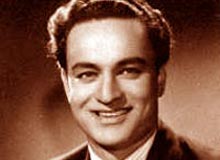
Mukesh was nicknamed as The Man with the Golden Voice and his songs are true examples of his inimitable voice. Mukesh was born as Zoraver Chand Mathur in Delhi on July 22nd, 1923. His name is mentioned with the names of great legends like Mohammed Rafi and Kishore Kumar. Mukesh left studies after the 10th standard and got a job with Delhi Department of Public Works. He experimented with voice recordings and at the same time, honed his singing ability. A short biography covering the life history of Mukesh has been given below.
The singer in Mukesh was recognized by the renowned actor Motilal, who happened to be a distant relative of Mukesh. He saw Mukesh perform at the wedding of his sister and recognized a hidden spark in the young boy. Mukesh was taken to Bombay where he received training in music to refine his voice. In this period he even managed to bag a role in a Hindi movie titled Nirdosh (1941), which unfortunately did not fare well at the box office. His first stint as a playback singer was in the movie Pehli Nazar (1945). The song incidentally was picturized on Motilal.
Mukesh had the voice that could paint a thousand shades of melancholy. The way he sang, with the perfect tone and diction, he was considered as second to none. The pain that he had in his voice could not be imitated by anyone else. One could feel the tenderness and joy with doses of hidden anguish in his voice that was presented in a raw manner. He went on to command a huge fan following and was counted as a legend among legends. The music maestro Salil Choudhury praised Mukesh with following quote:
"Each word from his lips was a pearl. No one could sing the way Mukesh did, with the right diction, inflexion and intonation. His vocal timbre was out of this world."
Mukesh finally discovered his own style with the films Mela (1948) and Andaaz (1949). With music director Naushad, Mukesh belted out some unforgettable hits like Tu Kahe Agar, Jhoom Jhoom ke Naacho Aaj, Hum Aaj Kahin Dil Kho Baithe, Toote Na Dil Toote Na. These four solos made him a well-known playback singer overnight. It was in the year 1948 that Mukesh sang for Raj Kapoor for the movie Aag. The voice of Mukesh perfectly matched the helplessness that was portrayed onscreen by Raj Kapoor in the song Zinda Hoon Is Tarah. After that there was no looking back and this wonderful partnership went on till the year 1975.
With Raj Kapoor, Mukesh immortalized heartbreaks and despair and belted out some classic numbers and endless list of hits. The ones that deserve a mention are Awaara (1951), Shri 420 (1955), Parvarish (1958), Anari (1959), Sangam (1964), Mera Naam Joker (1970) and Kabhi Kabhi (1976). His last recording with Raj Kapoor was the song "Ek Din Bik Jaayega" from the movie Dharam Karam. The music was composed by R.D. Burman.
Mukesh breathed his last while on a concert tour to Detroit, U.S. He suffered a massive heart attack. His untimely death shocked the entire nation and the film industry. When the news of his death reached the film industry, Raj Kapoor said, "I have lost my voice". Such was the fame of Mukesh who shall truly remain a legend. There was and will be none who could produce the same kind of magic he did.
Biography Of Mohammed Rafi
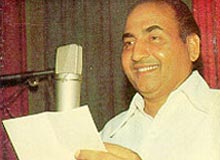
One of the greatest playback singers of India, Mohammed Rafi is considered no less than a genius when it comes to varied styles of music. Born on December 24th, 1924, this great soul had the perfect blend of melody, emotions and energy, which reflected greatly in his songs. Be it the classically inclined songs of Baiju Bawara or the foot tapping songs of Kashmir Ki Kali, Muhammad Rafi gave each song the treatment it deserved. His contribution to the Hindi film industry has been fabulous and perhaps no singer till date has managed to capture the hearts of fans the way Mohamed Rafi has. We capture the fascinating life history of Rafi in this short biography of Mohd. Rafi.
Muhammad Rafi was born in Kotla Sultan Singh located near Amritsar in the then undivided Punjab. Rafi had five older brothers ad his father's name was Hajji Ali Mohammad. Lovingly addressed as "Pheeko" by his family, Rafi started showing his inclination towards music at a very early age when he used to imitate the chants of a wandering beggar in his village. In the year 1935, Rafi's family moved to Lahore. Rafi's love for music was recognized soon by his family and he was encouraged to pursue it further. Thus, Mohamed Rafi went on to seek training in Hindustani classical music from eminent personalities like Ustad Bade Ghulam Ali Khan, Ustad Abdul Wahid Khan, Pundit Jiwanlal Matto and Firoze Nizami.
Rafi's first public performance was at the tender age of 13. One day Rafi along with his brother Hamid went to attend a performance by the renowned K.L. Saigal. But there was a power failure at the venue and the legendary singer refused to sing. When the audience began to lose patience, Rafi's brother Hamid requested the organizer to allow Rafi to keep the audience entertained till the power came back. He was allowed to do so and it turned out to be the correct exposure for him. Among the audience was seated the great composer Shyam Sunder who immediately recognized immense talent and untapped potential in Rafi. He invited Rafi to come to Bombay for a recording. From there on began the journey of the most versatile singer of India.
In the year 1944, Mohammed Rafi recorded his first song under music director Shyam Sunder. It was for a Punjabi movie named Gul Baloch. It was recognized by many and Rafi started to get more and more offers. Rafi also sang songs composed by Naushad for the movie Pehle Aap in the year 1944. He also acted in a couple of movies named Laila Majnu (1945) and Jugnu (1947). Another splendid performance was in the year 1946 when he sang the song "Tera Khilona Toota Balak" of the movie Anmol Ghadi. With the movie Jugnu (1947), Rafi bagged his first major hit. The song "Yahaan Badla Wafa Ka'' with Noor Jehan under Feroze Nizami went on to become a major hit with the public.
His music in the movie Baiju Bawara proved critics wrong and he went on to become one of the most demanded playback singers of that time. The film happened by accident. Talat Mehmood was the first choice for the film. Naushad, the music director caught Talat Mehmood smoking and was very annoyed. He then gave all the songs to Mohammed Rafi and the results were outstanding. In the year 1949, his song named "Suhani Raat Dhal Chuki" of the movie "Dulari" went on to become an anthem of sorts. There was no looking back thereafter and Rafi went on to produce hits after hits. He was the undisputed singer till the 70's.
He was patronized as the voice of the great actor Dev Anand during 1950's and 60's. He became the favorite singer of director O.P. Nayyar and sang many beautiful songs for him. Rafi also produced some of the greatest hits with S.D. Burman, which includes films like Tere Ghar ke Saamne (1957), Pyaasa (1957), Kaagaz Ke Phool (1959), Guide (1965), Aradhana (1969) and Abhimaan (1973). In fact, he even sang a playback number for the great singer Kishore Kumar for the movie Raagini. Apparently, O.P. Nayyar was so fascinated by Rafi's music that he got him to sing "Man Mora Baawara" of this movie. Rafi sang with Asha Bhonsle and Lata Mangeshkar and belted out hits after hits. Rafi became the voice of noted actor Rajendra Kumar and sang many romantic songs for his movies. His boisterous style of singing suited the versatile actor Shammi Kapoor. One could not imagine a reserved and gentle person like Rafi singing the "Yahoo" number. But then, that was Rafi.
During the 1970's, Kishore Kumar came into the limelight with his hits in the movie Aradhana. Rafi's output declined and Kishore Kumar started to overshadow his popularity. However, Rafi's songs were still everyone's favorite and he proved that no matter how many singers come and go, his position would remain undisputed. During mid 70's Rafi made a huge comeback with the movie "Hum Kisi Se Kam Nahi" and won the national award for the song "Kya Hua Tera Waada".
His major hits in the 70's include Amar Akbar Anthony (1977), Sargam (1979) and Karz (1980). The Qawali song "Pardah Hai Pardah" of the movie Amar Akbar Anthony was a superhit. Other hit songs in late 1970s include films like Laila Majnu (1976), Apnapan (1978), Qurbani, Dostana (1980) and The Burning Train (1980). On July 31st, 1980, this great singer went back home early after recording and dies due to a massive heart attack. His funeral procession was one befitting a king. Mohammed Rafi was a legend of legends and shall remain so till eternity.
Biography for Lata Mangeshkar
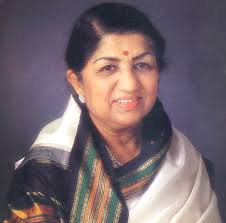
Lata Mangeshkar was born in Indore on September 8, 1929, and became, quite simply, the most popular playback singer in Bollywood's history. She has sung for over 50 years for actresses from Nargis to Preity Zinta, as well as having recorded albums of all kinds (ghazals, pop, etc). Until the 1991 edition, when her entry disappeared, the Guinness Book of World Records listed her as the most-recorded artist in the world with not less than 30,000 solo, duet,and chorus-backed songs recorded in 20 Indian languages between 1948 and 1987. Today that number might have reached 40,000!
She was born the daughter of Dinanath Mangeshkar, the owner of a theater company and a reputed classical singer in his own right. He started giving Lata singing lessons from the age of five, and she also studied with renowned singers Aman Ali Khan Sahib and Amanat Khan. Even at a young age she displayed a God-given musical gift and could master vocal exercises the first time.
Ironically, for someone of her stature, she made her entry into Bollywood at the wrong time - around the 1940s, when bass singers with heavily nasal voices, such as Noor Jehan and Shamshad Begum were in style. She was rejected from many projects because it was believed that her voice was too high-pitched and thin. The circumstances of her entry into the industry were no less inauspicious - her father died in 1942, the responsibility of earning income to support her family fell upon her, and between 1942 and 1948 she acted in as many as eight films in Hindi and Marathi to take care of economic hardships. She made her debut as a playback singer in the Marathi film Kiti Hasaal (1942) but, ironically, the song was edited out!
However, in 1948, she got her big break with Ghulam Haider in the film Majboor (1948), and 1949 saw the release of four of her films: Mahal (1949), Dulari (1949), Barsaat (1949), and Andaz (1949); all four of them became runaway hits, with their songs reaching to heights of what was until then unseen popularity. Her unusually high-pitched singing rendered the trend of heavily nasal voices of the day totally obsolete and, within a year, she had changed the face of playback singing forever. The only two lower-pitched singers to survive her treble onslaught to a certain extent were Geeta Dutt and Shamshad Begum.
Her singing style was initially reminiscent of Noor Jehan, but she soon overcame that and evolved her own distinctive style. Her sister, Asha Bhosle, too, came up in the late 1950s and the two of them were the queens of Indian playback singing right through to the 1990s. Her voice had a special versatile quality, which meant that finally music composers could stretch their creative experiments to the fullest. Although all her songs were immediate hits under any composer, it was the composers C. Ramchandra and Madan Mohan who made her sound her sweetest and challenged her voice like no other music director.
The 1960s and 1970s saw her go from strength to strength, even as there were accusations that she was monopolizing the playback-singing industry. However, in the 1980s, she cut down her workload to concentrate on her shows abroad. Today, Lata sings infrequently despite a sudden resurgence in her popularity, but even today some of Hindi Cinema's biggest hits, including Dilwale Dulhania Le Jayenge (1995), Dil To Pagal Hai (1997), and Veer-Zaara (2004) feature her legendary voice.
No matter which female playback singer breaks through in any generation, she cannot replace the timeless voice of Lata Mangeshkar. She is an icon beyond icons....
Subscribe to:
Posts (Atom)
